About the Author
I am addicted to food.
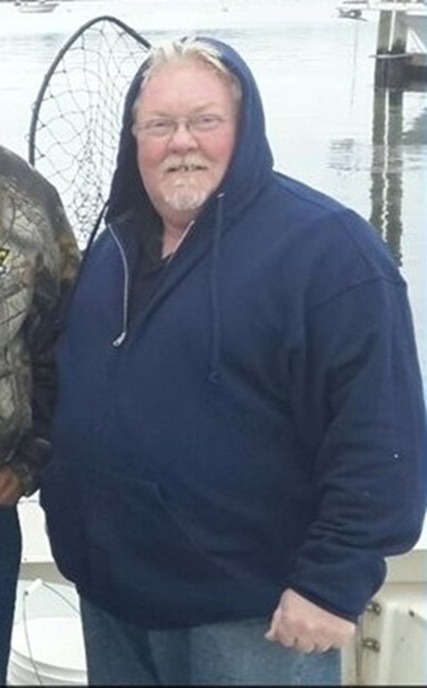
I want to say that plainly because trust starts with honesty. I am not a doctor. I am not a nutritionist. I am not a guru who figured out the perfect diet and then started selling it. I am a man who spent decades using food to manage stress, boredom, grief, celebration, and the quiet background hum of a life that felt harder than it needed to be.
I know what obesity feels like from the inside. Not the statistics. The lived reality: the shortness of breath on a single flight of stairs, the way a restaurant booth presses against your ribs, the careful geometry of fitting into a car seat, the dread of a photograph, the private conversation every morning about whether today will be the day you finally get it under control. I know the anguish. I know the self-deception. I know the shame that comes not from failing once, but from failing hundreds of times and still not knowing why.
The system was broken, not me
In October of 2015 I stepped on a scale and saw 310 pounds. My waist was 50 inches. My body fat was roughly half my body weight. I was pre-diabetic, with a fatty liver, an enlarged heart, constant palpitations, and a resting heart rate of 110 beats per minute. At five feet five inches tall, I was carrying a load my frame was never engineered for.
A few days later, on a boat deck off the Rhode Island coast, someone took the photograph you see above. I did not look at it for days. When I finally did, I heard my own voice say two sentences: Damn, you're big. You're going to die soon.
That was not a motivational moment. It was a diagnostic one. The problem had finally become too large to ignore. And once I stopped treating my body as a moral failure and started treating it as a failing system, things became solvable. Inputs, outputs, tolerances, instrumentation. The same way you would diagnose any machine that is drifting out of spec.
The first rebuild - and the warning shot
What followed was not a diet. It was a rebuild. I lost more than 150 pounds. I rebuilt my daily architecture: what I ate, when I ate, how I moved, how I measured, how I corrected when things drifted. For a while, it held.
Then, in late 2018, I had a TIA - a mini stroke. I was on three blood-pressure medications by the time the diagnosis settled. Progress is not the same as stability. The underlying system was still fragile, and my body reminded me that weight loss alone does not equal metabolic health.
The relapse
In 2019 and 2020 I regained 99 pounds. My weight climbed back to 211. I watched the drift happen in slow motion - the small daily concessions, the skipped logging, the creeping portions, the return of the old coping pattern. The system I had built was not robust enough to survive real life under real stress.
This is the part most transformation stories leave out. They give you a before and an after and imply that the middle is just determination. The truth is that most people do not come back from a major relapse. Statistically, almost no one does. I did - but only because I stopped looking for a personality fix and started building a better machine.
The second rebuild
I rebuilt myself again, more completely than before. I changed not just what I ate, but how I thought about food, identity, routine, and maintenance. I built a fasting structure. I built a macro framework. I built a training rhythm. I built a measurement and correction loop. I built consistency as a design feature, not as a mood.
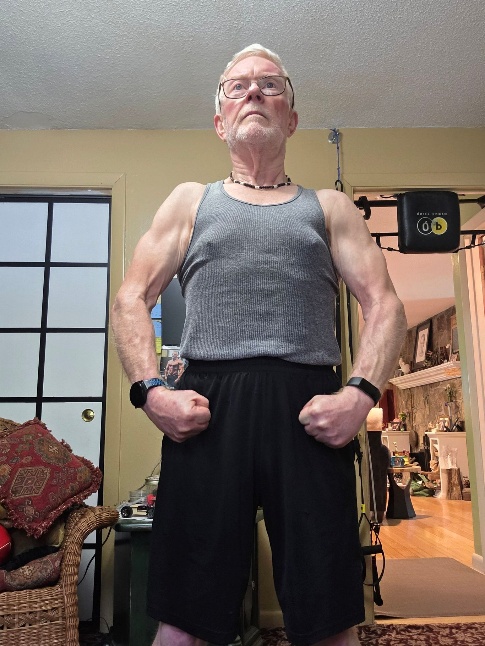
The weight dropped from 211 to 160, then 150, then into the 140s, then to 139. My body fat fell into the mid-teens. My visceral fat score dropped from 14 to 2.5. My lean mass stayed high for a man my age.
On February 2, 2026, one day before my 65th birthday, my doctor discontinued all three hypertension medications. Not because I asked. Because my body had changed enough that I no longer needed them.
Why I wrote these books
I wrote The Metabolic Engineer series because I needed it to exist. I needed a single framework that treated food addiction, obesity, relapse, and metabolic repair as engineering problems instead of character tests. Volume I is the collapse and the decision to live. Volume II is the daily architecture: food, prep, cooking, routine. Volume III is the full manual - the coaching layer that keeps the system running when life tries to break it.
I am not promising a miracle. I am promising a system. I am proof that a body can be rebuilt more than once, that a relapse is not a sentence, and that the work gets easier when the design gets better. If you have ever felt like your relationship with food is unmanageable, like your body is drifting in the wrong direction, or like you are too old or too far gone to change - I am writing to you, because I have been where you are.
I am not another person with an opinion about fat people. I am one of you. And the system I built is the system that carried me home.
Stay in the loop
Release dates, early excerpts, and field notes from the rebuild.